
Recovery, Resilience and the Incomplete Transformation
George Alogoskoufis
This article was also published in Substack.com
______________________________________
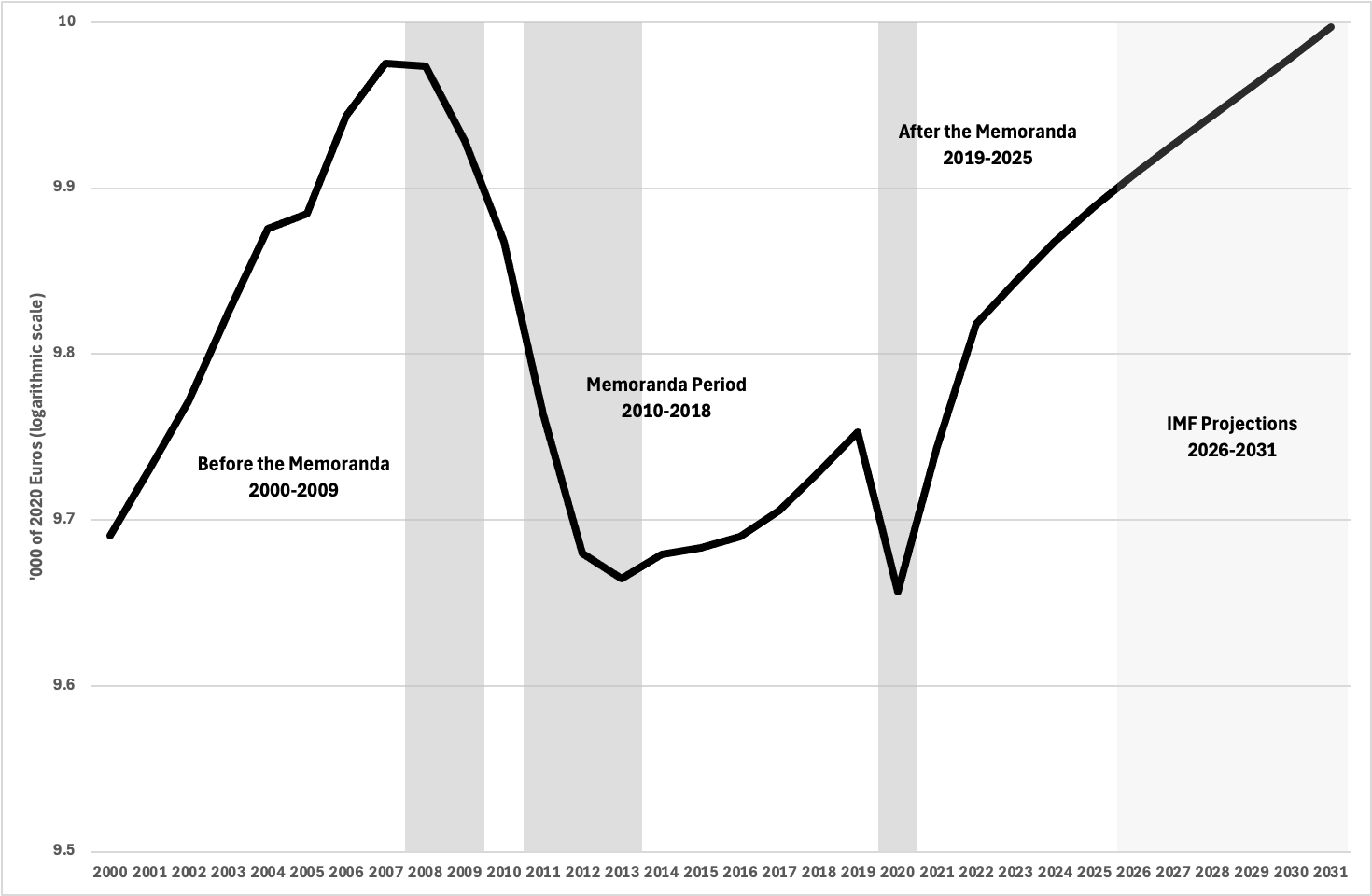
When Greece emerged from its third and final economic adjustment programme on 20 August 2018, the country had regained financial stability but not economic prosperity. Eight years of unprecedented fiscal adjustment and institutional reform had eliminated the twin fiscal and external deficits that triggered the crisis. Yet the price had been exceptionally high: national output had fallen by roughly one quarter, unemployment remained close to 20%, capital controls were still in force, public debt approached 190% of GDP and the banking system was burdened by an enormous stock of non-performing loans.
The end of the memoranda was therefore an important political and psychological milestone, but not a clean break with the past. Greece remained under enhanced European surveillance until August 2022, while its economy continued to carry the scars of the deepest and most prolonged depression experienced by any advanced country in modern peacetime.
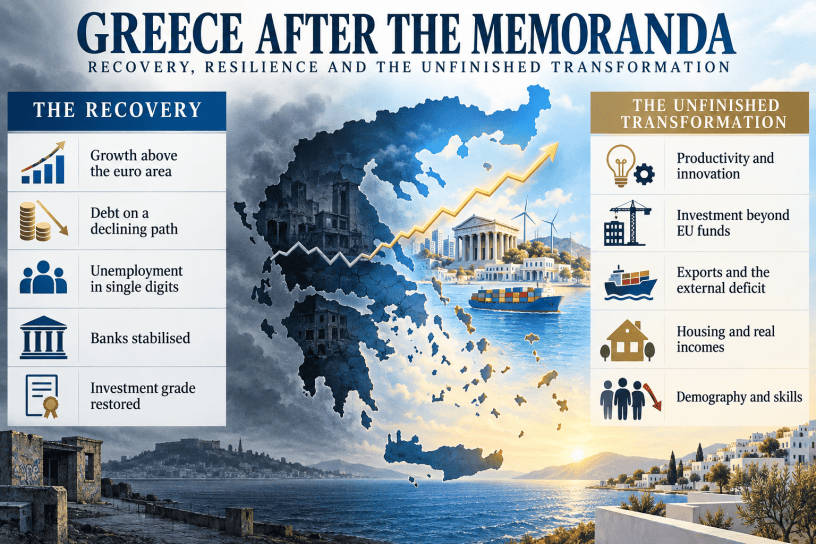
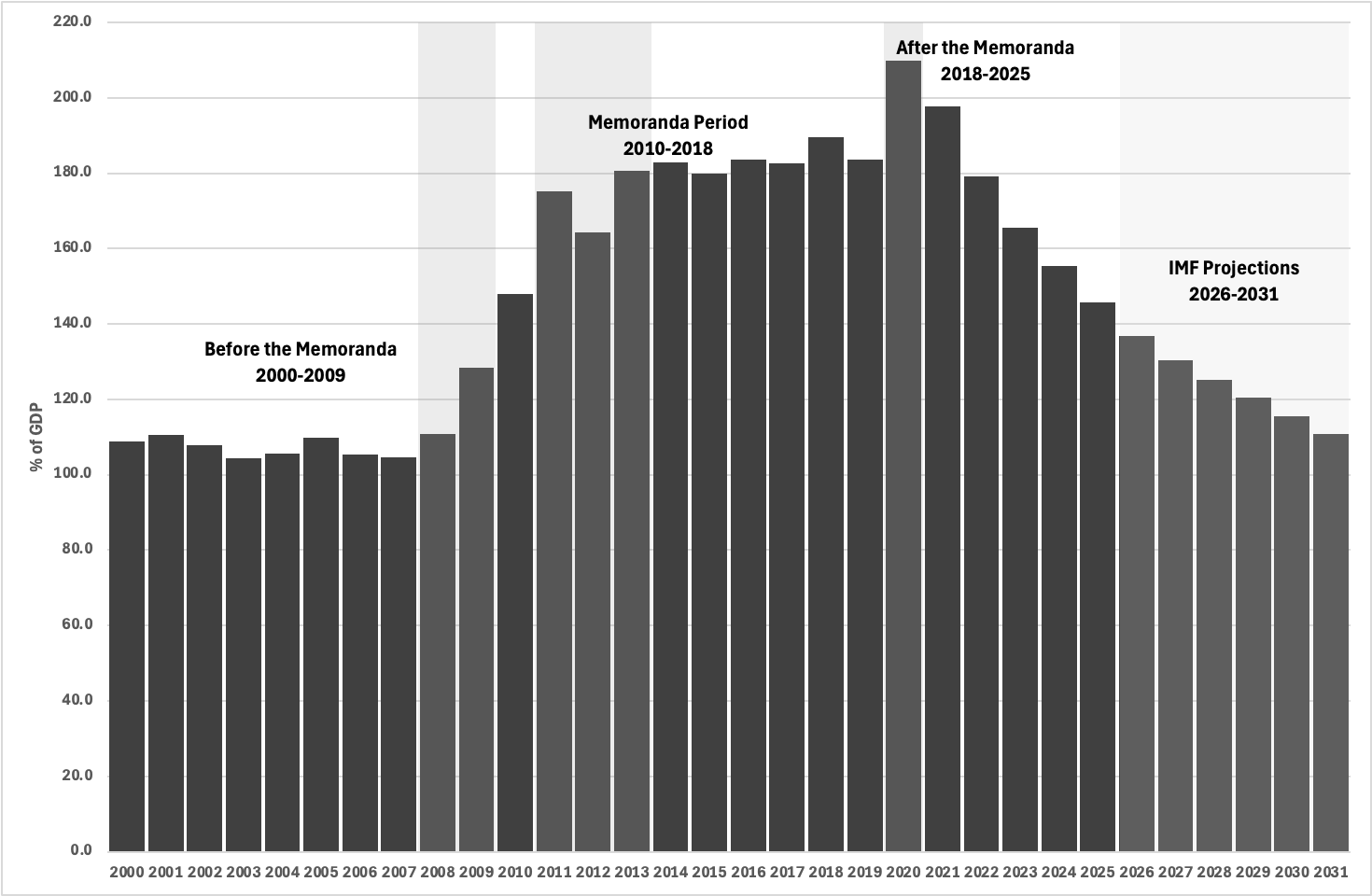
Eight years later, the picture is quite different. Economic growth has generally exceeded the euro-area average, unemployment has fallen to single digits, the banks have been stabilised, the budget has returned to large primary surpluses and Greece has regained investment-grade status. Public debt, after peaking at approximately 210% of GDP during the pandemic, declined to about 146% in 2025. The recovery is real and, in several respects, impressive.
It is not, however, complete. Greece has restored macroeconomic credibility without yet achieving full convergence in productivity, real incomes or institutional effectiveness. The post-memorandum period is best understood neither as an economic miracle nor as a continuation of national decline. It is a story of recovery, resilience and an incomplete transformation.
From stabilisation to successive shocks
The first phase, between August 2018 and the outbreak of the pandemic, was one of gradual normalisation. Growth returned, capital controls were abolished in September 2019 and confidence improved. Following the change of government in July 2019, economic policy placed greater emphasis on reducing taxes and social-security contributions, accelerating privatisations, attracting foreign investment and simplifying relations between businesses and the state.
This process was abruptly interrupted by the pandemic. Greece was particularly vulnerable because tourism, hospitality and other services requiring physical presence account for a large part of economic activity. Real GDP consequently contracted sharply in 2020, while extensive government support pushed public debt above 200% of GDP.
Yet the pandemic also demonstrated how much had changed since the sovereign-debt crisis. Greece did not lose access to financial markets. The temporary suspension of European fiscal rules, the European Central Bank’s bond-purchase programmes and the creation of the European recovery fund enabled the government to support employment, incomes and businesses. Unlike the austerity imposed during the earlier crisis, fiscal policy became strongly countercyclical.
The rebound in 2021 and 2022 was correspondingly powerful. It was followed, however, by the energy and food-price shock associated with Russia’s invasion of Ukraine and, more recently, by renewed geopolitical and energy-market disruption. Nevertheless, Greece continued to outperform much of Europe. Real GDP grew by 2.1% in 2025, compared with 1.4% in the euro area. The European Commission expects growth of 1.8% in 2026, while the OECD projects 1.9%, despite higher energy prices and weaker international conditions.
The restoration of fiscal credibility
The most unambiguous achievement of the post-memorandum period is the transformation of the public finances. Apart from the exceptional pandemic years, Greece has returned to substantial primary surpluses. The Bank of Greece estimates that the primary surplus reached 4.4% of GDP in 2025, considerably exceeding the original target.
This improvement cannot be attributed solely to austerity. Economic growth and rising employment have expanded the revenue base, while inflation has increased nominal tax receipts. More important over the longer term has been the digitalisation of tax administration. Electronic payments, online invoicing, digital accounting records and the connection of cash registers to point-of-sale terminals have restricted opportunities for tax evasion. Better compliance has allowed revenues to rise even as some tax rates and social-security contributions have been reduced.
The decline of the public-debt ratio has been equally dramatic. According to the IMF, it fell by approximately nine percentage points in 2025 alone, to 146.6% of GDP, around 65 percentage points below its pandemic peak. High inflation and nominal GDP growth helped, but persistent primary surpluses and early repayments of official loans have also played an important role.
Moreover, the composition of the debt makes it less vulnerable than its size suggests. Most is held by official European institutions, with long maturities and relatively favourable interest rates. The weighted average maturity remains above 18 years, reducing the immediate effect of higher market rates.
This does not mean that fiscal constraints have disappeared. Greece still has one of the highest debt ratios in the world. Population ageing, defence expenditure, climate adaptation and the eventual refinancing of official debt will create growing pressures. The lesson of the crisis is not that large permanent surpluses should become an end in themselves, but that fiscal credibility is a valuable national asset that should not be squandered.
The rehabilitation of the banks
The stabilization of the banking system is another major accomplishment. At the end of the adjustment programmes, non-performing exposures still absorbed an extraordinarily large proportion of bank balance sheets. Banks were unable to perform their central economic function: directing savings towards productive firms and investments.
Through sales, write-offs and securitisations—many supported by the state-guaranteed Hercules scheme—the systemic banks reduced their non-performing-loan ratios close to average European levels. Profitability, capital adequacy and market access improved, and bank lending to businesses began to recover.
But the apparent resolution of the banking problem must be interpreted cautiously. Much of the distressed debt was transferred rather than eliminated. It is now held by specialised loan-servicing companies and continues to burden households and firms. The legacy of the crisis thus survives outside the formal banking system, constraining entrepreneurship, property transactions and social mobility.
Investment and the Recovery Fund
Before 2009, Greek growth was driven excessively by private and public consumption, residential construction and foreign borrowing. One of the most encouraging developments since 2018 has been the stronger contribution of investment and exports. Foreign direct investment has increased, exports of goods and modern services have expanded, and sectors such as logistics, renewable energy, information technology and professional services have acquired greater importance.
The EU Recovery and Resilience Facility has reinforced this process. Greece’s plan provides more than €36 billion in grants and loans for digitalisation, energy, infrastructure, skills and private investment. It also links disbursements to reforms in taxation, justice, public administration, land use and the business environment.
The Bank of Greece reports that investment remained the principal driver of growth in early 2026. Yet the decisive question is what happens after the Recovery Fund expires. Public investment is expected to fall sharply in 2027, while the European Commission forecasts growth slowing to 1.6% as implementation of the programme winds down.
The danger is that European funds may generate a temporary surge rather than a permanent improvement in productive capacity. Investment remains below the level needed to replace the capital lost during the long crisis. Too much continues to flow into tourism, residential construction and real estate, and too little into machinery, research, advanced manufacturing and internationally scalable firms.
The warning from the external deficit
The current-account deficit reveals the limitations of the new growth model. It narrowed to 5.7% of GDP in 2025 but remained large, reflecting strong demand for imported consumer goods, energy and investment equipment.
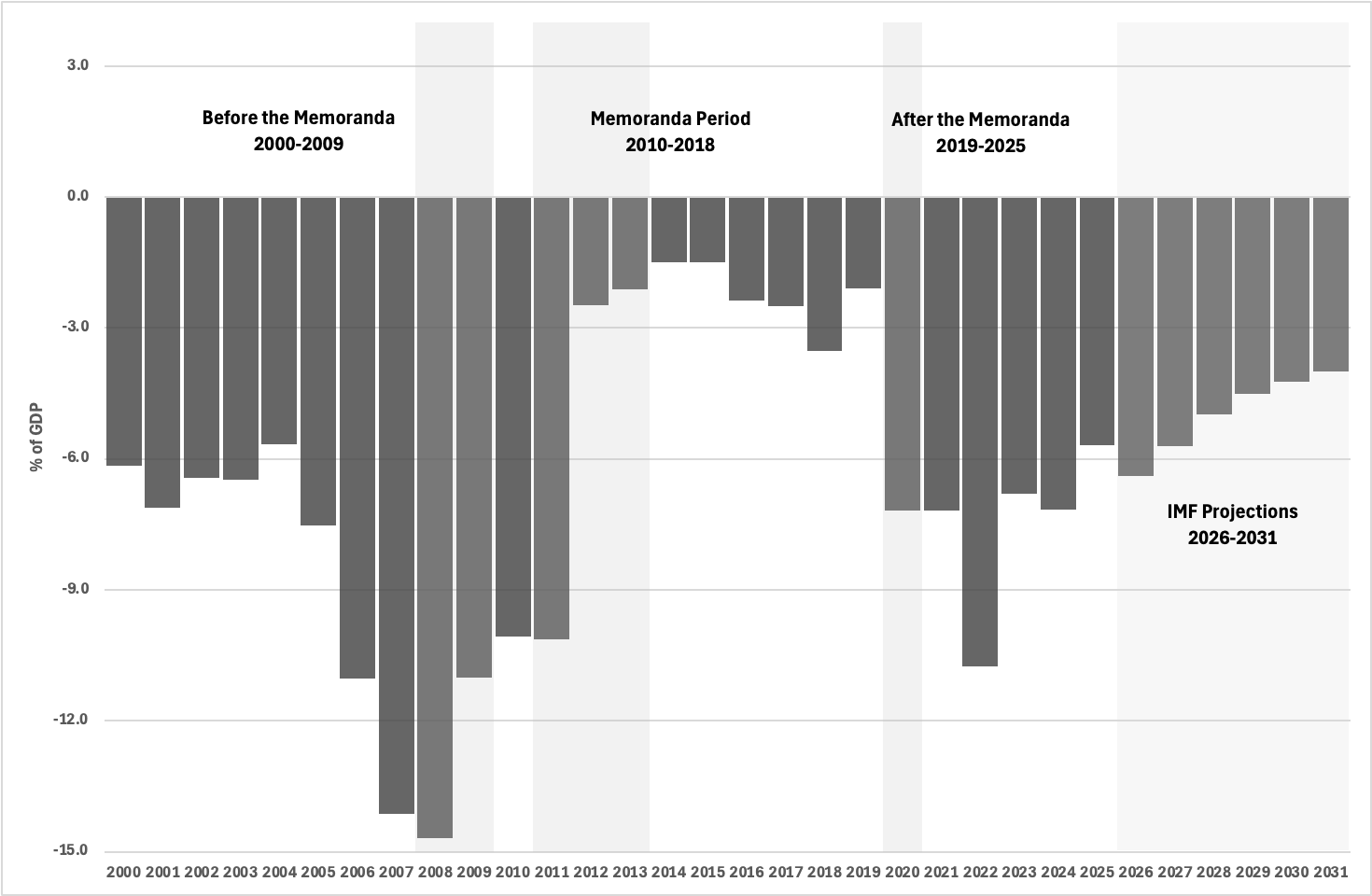
A deficit caused by productive investment is less worrying than one driven by consumption. Greece needs to import machinery and technology to modernise its capital stock. But the persistence of a deficit of this magnitude also indicates that domestic production and exports have not expanded sufficiently to meet rising demand.
The structure of exports remains narrow. Tourism and shipping are globally competitive, but both are sensitive to geopolitical developments and fluctuations in world demand. Manufacturing accounts for a relatively small part of value added, while many firms remain too small to invest in technology, develop export networks or absorb skilled labour.
The next stage must therefore involve not merely more investment, but investment of a different composition: in technology, energy networks, water management, research, export-oriented manufacturing, logistics and climate resilience.
Jobs have recovered faster than incomes
The labour-market recovery has been remarkable. Unemployment, which peaked at nearly 28% during the crisis and was still close to 20% in 2018, has fallen to single digits. Labour shortages have emerged in tourism, construction, agriculture, health care and technical occupations. A country once characterised by mass unemployment now faces simultaneous unemployment and unfilled vacancies.
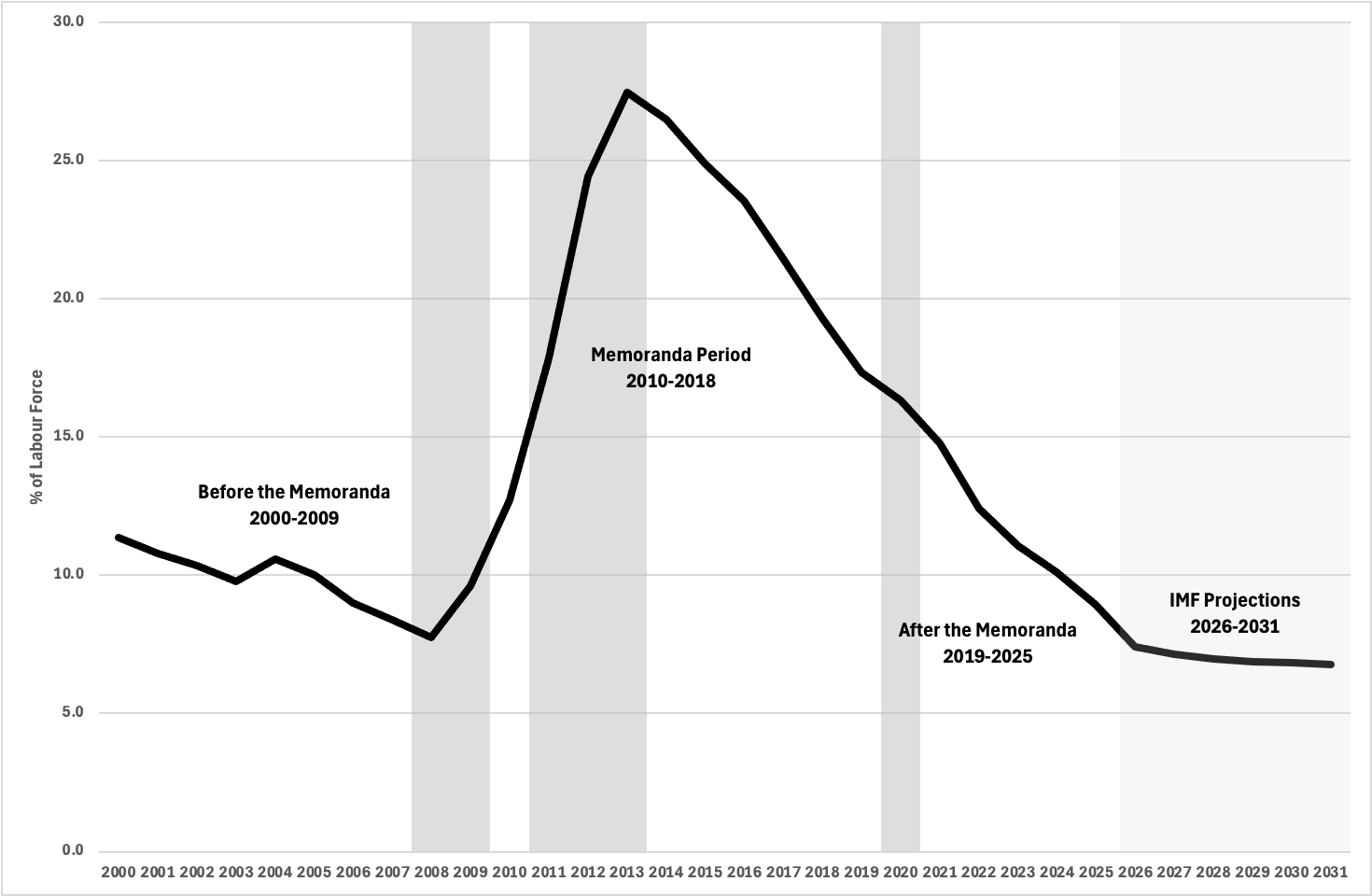
This paradox reflects structural mismatches. Long-term unemployment remains high, participation rates—particularly among women and younger people—remain below European averages, and the skills of available workers often do not correspond to employers’ requirements. The emigration of hundreds of thousands of predominantly young and educated Greeks during the crisis further weakened the country’s human-capital base.
Wages have increased, especially at the statutory minimum. Yet real purchasing power has recovered more slowly. Inflation since 2021 has raised food and energy costs, while rents and house prices have increased even faster. Housing has become a central economic and social issue, particularly in Athens, Thessaloniki and popular tourist destinations.
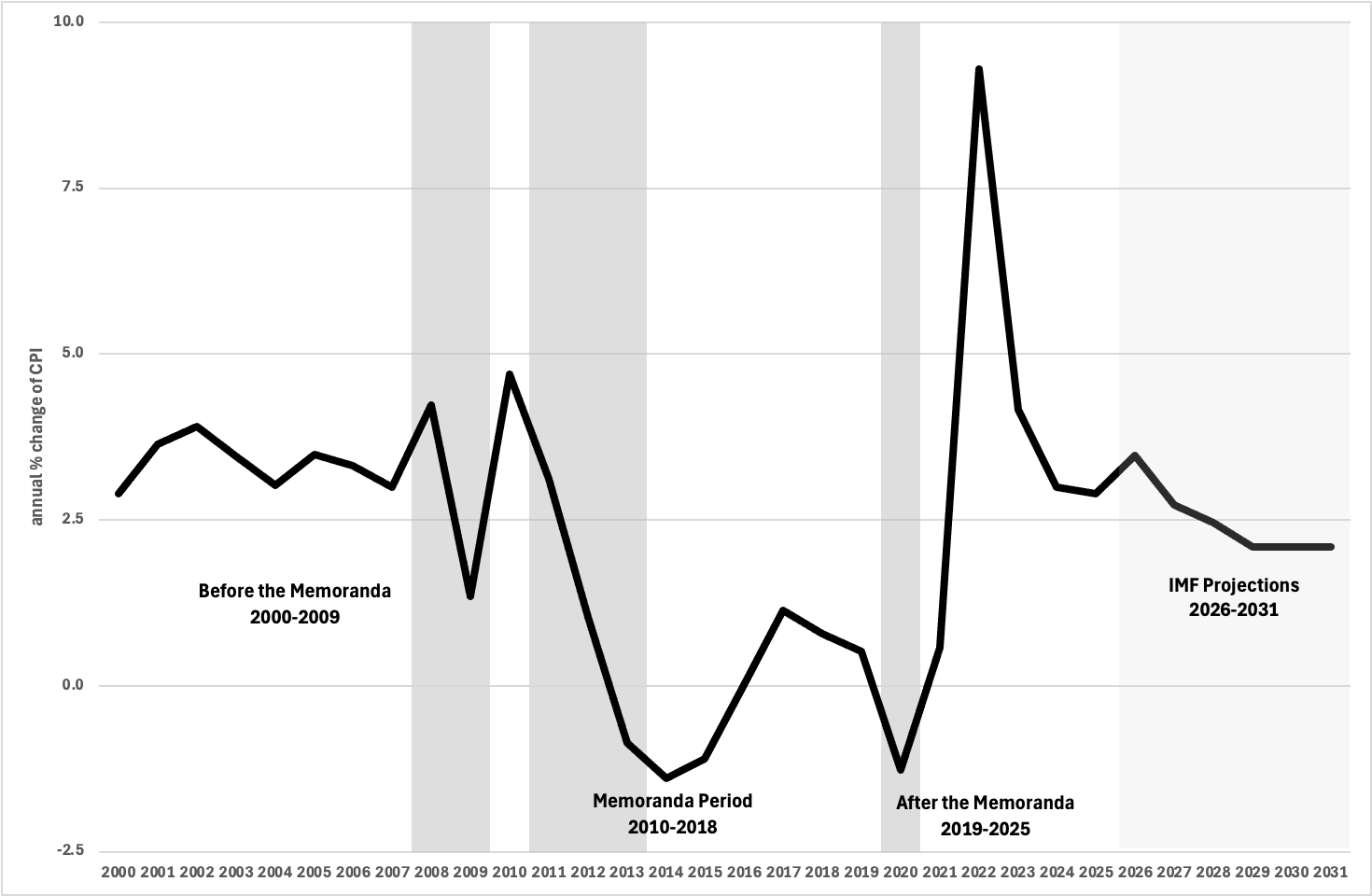
The causes include limited new construction during the crisis, an ageing housing stock, short-term rentals, foreign demand and slow planning and licensing procedures. Subsidising tenants or homebuyers may offer temporary relief, but without an expansion of supply it risks pushing prices even higher. A credible housing strategy must bring vacant properties back into use, accelerate construction, renovate the existing stock and regulate short-term rentals where they place excessive pressure on local communities.
Productivity is the central challenge
The ultimate test of the Greek recovery is productivity. The OECD concludes that Greece has begun to narrow the income gap with more advanced economies, but progress is being restricted by weak productivity growth, a still-large investment gap and the difficulty smaller firms face in adopting technology and innovation.
The digitalisation of the state, especially through gov.gr, has transformed many interactions between citizens, businesses and public administration. Business licensing has improved, renewable-energy capacity has increased and tax administration has become considerably more effective.
Nevertheless, familiar obstacles remain. Judicial proceedings are slow, spatial planning and land registration are incomplete, regulation is often complex, educational outcomes are uneven and the public administration’s capacity varies greatly across sectors. Digital interfaces are valuable, but they cannot substitute for reliable institutions, effective infrastructure and administrative accountability.
Firm size is equally important. An economy dominated by very small businesses struggles to generate economies of scale, finance research, provide systematic training or enter global value chains. Greater competition, incentives for mergers and partnerships, improved access to equity finance and stronger links between universities and enterprises would help productive companies grow.
Demography and the limits of recovery
Demography may prove the most difficult constraint of all. Greece’s population is shrinking and ageing. A smaller working-age population reduces labour supply and the tax base, while increasing pension, health-care and long-term-care expenditure. Without higher productivity, greater female employment, selective immigration and the return of some of those who left during the crisis, potential growth will inevitably slow.
This makes the quality of growth more important than its headline rate. Greece cannot rely indefinitely on mobilising unemployed labour, European transfers or the recovery of tourism. Sustainable convergence requires each worker and each unit of capital to become more productive.
The country has travelled an extraordinary distance since August 2018. It is no longer excluded from markets, threatened by banking collapse or trapped in an apparently endless cycle of austerity and recession. It has restored fiscal credibility, reduced unemployment, repaired its banks and brought public debt onto a declining path.
But recovery should not be confused with transformation. Greece has not yet fully replaced the consumption-led model that preceded the crisis with one based on productivity, innovation, exports and broad-based prosperity. Nor have the benefits of improved macroeconomic performance been felt equally across society.
The achievement of the post-memorandum years is that Greece has become a normal European economy again. The challenge of the next decade is more ambitious: to become a more productive, inclusive and resilient one.

