
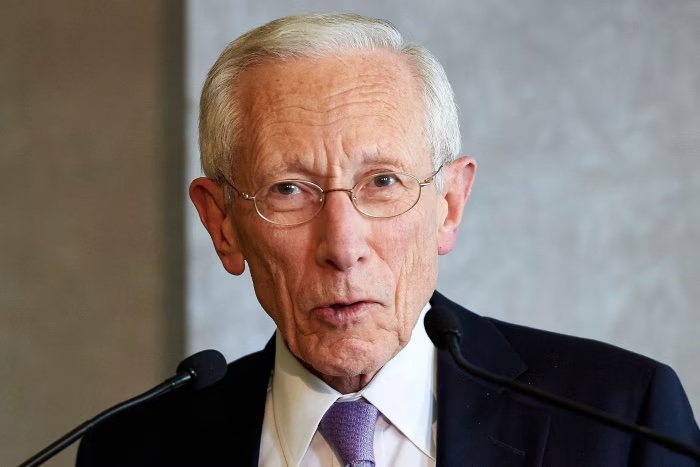
The global economic community mourns the passing of Stanley Fischer, who died in 2025 at the age of 81. A towering academic and policy economist, Fischer shaped not only the theoretical underpinnings of modern macroeconomics but also the practice of economic governance and policy across continents.
Born in Lusaka, Zambia, in 1943 and raised in Southern Rhodesia (now Zimbabwe) before moving to the United States, Fischer’s life and work bridged multiple worlds—developing and developed economies, academia and policy, theory and practice. He earned his Ph.D. in economics from the Massachusetts Institute of Technology (MIT) in 1969, where he would later return as a revered professor and mentor to generations of economists, including Ben Bernanke, Mario Draghi, and Olivier Blanchard.
Fischer’s academic contributions to macroeconomics were foundational. His work on rational expectations, nominal wage rigidity, and the role of credibility in monetary policy transformed New Keynesian thinking and set the stage for decades of research on inflation, stabilization, and central bank behavior. In collaboration and sometimes juxtaposition with economists such as Robert Lucas, Thomas Sargent, and John Taylor, Fischer helped navigate the transition from Keynesian orthodoxy to the new neoclassical synthesis.
But it was in public service that Fischer demonstrated the full breadth of his intellect and character. As Chief Economist of the World Bank (1988–1990), First Deputy Managing Director of the International Monetary Fund (IMF)(1994–2001), Governor of the Bank of Israel (2005–2013), and later as Vice Chair of the Federal Reserve (2014–2017), Fischer left an indelible mark on the global economic architecture.
At the IMF, he helped guide the institution through the turbulence of the Asian financial crisis, playing a central role in managing international bailouts and fostering structural reform. As Governor of the Bank of Israel, he won wide acclaim for steering the Israeli economy with foresight and prudence during the global financial crisis—making it one of the few advanced economies to grow in 2009. And at the Federal Reserve, he became a pillar of stability and continuity during a time of uncertainty and monetary experimentation.
Fischer was known for his technical brilliance, his calm demeanor, moral clarity, and deep sense of duty. He believed in the power of institutions, the importance of sound macroeconomic policy, and the role of economists as public servants. His speeches—always lucid, modest, and insightful—reflected a lifelong commitment to evidence-based policymaking.
A natural teacher, Fischer mentored countless economists who would go on to lead the world’s major financial institutions. His legacy lives on in the minds he shaped, the policies he crafted, and the stability he helped secure.
In an age too often marked by dogma and division, Stanley Fischer exemplified the virtues of reason, balance, and service. The world has lost one of its most distinguished economic statesmen.
Deepest condolences to his wife, his children, and his global family of students, colleagues, and admirers.
An assessment of his contributions and legacy by Olivier Blanchard
Link to the announcement of Stanley Fischer’s passing in the Financial Times
 Prof George Alogoskoufis